

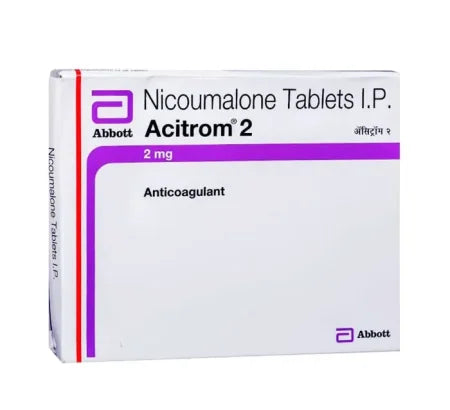
What is Acitrom 2 mg?
Acitrom 2 mg is a prescription anticoagulant medication used to reduce the risk of harmful blood clot formation in the body. It contains Acenocoumarol 2 mg as its active ingredient, which belongs to a class of medicines known as vitamin K antagonists. The medication is commonly prescribed for patients who are at risk of developing blood clots due to certain heart conditions, artificial heart valves, deep vein thrombosis (DVT), pulmonary embolism, or other clotting disorders.
Blood clots can obstruct normal blood circulation and potentially lead to serious health complications such as stroke, heart attack, or lung blockage. Acitrom 2 mg helps lower these risks by slowing the body's natural clotting process under medical supervision.
Active Ingredient
-
Generic Name: Acenocoumarol
-
Strength: 2 mg
-
Drug Class: Anticoagulant (Blood Thinner)
-
Dosage Form: Oral Tablet
How Acitrom 2 mg Works
The human body relies on vitamin K to produce certain clotting factors that help stop bleeding when injuries occur. Acitrom 2 mg works by blocking the action of vitamin K, thereby reducing the production of these clotting factors.
As a result, blood takes longer to clot, decreasing the likelihood of unwanted clot formation inside blood vessels. This mechanism helps maintain smoother blood flow and protects against conditions associated with excessive clotting.
Unlike medications that dissolve existing clots, Acitrom primarily helps prevent new clots from forming and existing clots from becoming larger.
Medical Uses of Acitrom 2 mg
Doctors may prescribe Acitrom 2 mg for various medical conditions where clot prevention is essential.
Prevention of Deep Vein Thrombosis (DVT)
Deep vein thrombosis occurs when blood clots form in deep veins, usually in the legs. Acitrom helps reduce the risk of clot formation and related complications.
Pulmonary Embolism Management
A pulmonary embolism happens when a blood clot travels to the lungs. Anticoagulant therapy may help prevent further clot-related events.
Patients with Artificial Heart Valves
Individuals with mechanical heart valves often require long-term anticoagulation therapy to minimize the risk of clot formation around the valve.
Atrial Fibrillation
Patients with irregular heart rhythms such as atrial fibrillation may be prescribed Acitrom to help reduce the risk of stroke caused by blood clots.
Certain Clotting Disorders
Some inherited or acquired conditions increase the tendency for blood clot formation. Acitrom may be recommended as part of long-term management.
Key Features of Acitrom 2 mg
Proven Anticoagulant Therapy
Acenocoumarol has been used for many years in the prevention and management of thromboembolic disorders.
Supports Long-Term Treatment
The medication is often prescribed for prolonged use when continuous clot prevention is required.
Oral Administration
Available in tablet form, making it convenient for daily treatment according to physician instructions.
Individualized Dosing
Dosage can be adjusted based on blood test results and individual treatment requirements.
Widely Prescribed
Frequently used in patients requiring anticoagulant therapy across various cardiovascular and clotting-related conditions.
Benefits of Acitrom 2 mg
The primary benefits of Acitrom 2 mg include:
-
Helps prevent harmful blood clot formation
-
Reduces the risk of stroke in certain patients
-
Supports management of deep vein thrombosis
-
Assists in preventing recurrent clotting episodes
-
Helps protect patients with artificial heart valves
-
Supports long-term anticoagulation therapy
-
Contributes to improved blood circulation
How to Take Acitrom 2 mg
Acitrom should be taken exactly as prescribed by a healthcare professional.
The tablet is usually swallowed whole with water and may be taken with or without food. It is generally recommended to take the medication at the same time each day to maintain consistent blood levels.
Patients should never alter their dosage without medical advice, as both insufficient and excessive anticoagulation can lead to serious complications.
Regular monitoring through blood tests is often necessary during treatment.
Importance of INR Monitoring
One of the most important aspects of treatment with Acitrom 2 mg is monitoring the International Normalized Ratio (INR).
INR testing helps determine how quickly blood is clotting and allows healthcare providers to adjust the dosage when necessary.
An INR level that is too low may increase clotting risk, while an excessively high INR may raise the likelihood of bleeding complications.
Routine monitoring helps maintain treatment safety and effectiveness.
Possible Side Effects
Like all medications, Acitrom 2 mg may cause side effects in some individuals.
Common Side Effects
-
Mild bruising
-
Nosebleeds
-
Bleeding gums
-
Nausea
-
Stomach discomfort
-
Hair thinning
-
Fatigue
These effects are generally manageable but should be discussed with a healthcare provider if they persist.
Serious Side Effects
Immediate medical attention may be required if any of the following occur:
-
Unusual or excessive bleeding
-
Blood in urine
-
Blood in stools
-
Vomiting blood
-
Severe headache
-
Sudden weakness or numbness
-
Unexplained large bruises
-
Prolonged bleeding from cuts
Such symptoms may indicate excessive anticoagulation and require urgent evaluation.
Precautions and Warnings
Before starting Acitrom 2 mg, patients should inform their doctor about their complete medical history.
Special caution may be necessary in individuals with:
-
Liver disease
-
Kidney impairment
-
High blood pressure
-
Stomach ulcers
-
Bleeding disorders
-
Recent surgery
-
History of stroke
-
Alcohol dependency
Regular follow-up appointments are important throughout treatment.
Food and Dietary Considerations
Vitamin K intake can influence the effectiveness of Acitrom.
Foods rich in vitamin K include:
-
Spinach
-
Kale
-
Broccoli
-
Cabbage
-
Green leafy vegetables
Patients do not necessarily need to avoid these foods entirely, but maintaining a consistent dietary pattern is often recommended to help stabilize INR levels.
Dietary changes should be discussed with a healthcare professional.
Drug Interactions
Acitrom 2 mg can interact with numerous medications, supplements, and herbal products.
Potential interactions may occur with:
-
Aspirin
-
Nonsteroidal anti-inflammatory drugs (NSAIDs)
-
Certain antibiotics
-
Antifungal medications
-
Antiplatelet drugs
-
Herbal supplements such as ginkgo or garlic
-
Some cholesterol-lowering medicines
Patients should always provide a complete list of medications they are taking before beginning treatment.
Storage Instructions
-
Store below room temperature as directed on the packaging.
-
Keep away from excessive heat and moisture.
-
Protect from direct sunlight.
-
Keep out of reach of children and pets.
-
Store in the original container until use.
Who Should Avoid Acitrom 2 mg?
This medication may not be suitable for:
-
Individuals with active bleeding disorders
-
Patients with severe uncontrolled hypertension
-
People allergic to Acenocoumarol
-
Patients with a high risk of major bleeding
-
Individuals unable to undergo regular INR monitoring unless advised by a physician
A healthcare provider will determine whether the medicine is appropriate based on individual medical circumstances.
What is Lorem Ipsum?
Lorem Ipsum is simply dummy text of the printing and typesetting industry. Lorem Ipsum has been the industry's standard dummy text ever since the 1500s, when an unknown printer took a galley of type and scrambled it to make a type specimen book. It has survived not only five centuries, but also the leap into electronic typesetting, remaining essentially unchanged. It was popularised in the 1960s with the release of Letraset sheets containing Lorem Ipsum passages, and more recently with desktop publishing software like Aldus PageMaker including versions of Lorem Ipsum.
Shipping Details
Estimated ship dimensions: 11.5 inches length x 9.0 inches width x 2.0 inches height
Estimated ship weight: 2.48 pounds
We regret that this item cannot be shipped to PO Boxes.
Lorem ipsum dolor sit amet, consectetur adipisicing elit, sed do eiusmod tempor incididunt ut labore et dolore magna aliqua. Ut enim ad minim veniam, quis nostrud exercitation
Returns
Not happy with a purchase? No problem. We’ve made returning items as easy as possible. And, most purchases can be returned for free. Learn more about our Returns Policy