

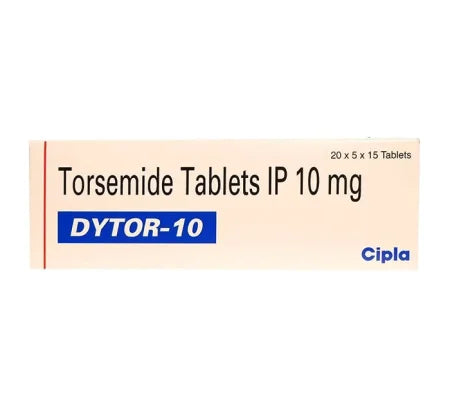
What is Dytor 10 mg?
Dytor 10 mg is a prescription medication used to reduce excess fluid retention (edema) caused by conditions such as heart failure, kidney disease, or liver disorders. It contains Torsemide 10 mg, a loop diuretic that helps the kidneys remove excess water and salt from the body through urine. By reducing fluid buildup, the medication can help relieve swelling, improve breathing in some patients with fluid overload, and reduce strain on the heart and blood vessels.
Unlike medicines used for temporary symptom relief, Dytor 10 mg is generally prescribed as part of a long-term treatment plan and should only be taken under the guidance of a healthcare professional.
Active Ingredient
-
Generic Name: Torsemide
-
Strength: 10 mg
-
Drug Class: Loop Diuretic
-
Dosage Form: Oral Tablet
How Dytor 10 mg Works
Dytor 10 mg works by acting on a specific part of the kidneys known as the loop of Henle. It blocks the reabsorption of sodium and chloride, allowing these minerals to be eliminated in the urine. As water follows sodium, the body removes excess fluid more efficiently.
This reduction in retained fluid helps decrease swelling in the feet, legs, ankles, and abdomen while also lowering the amount of fluid that can accumulate in the lungs. In people with high blood pressure, reducing excess fluid may also contribute to better blood pressure control and lower the risk of cardiovascular complications.
Medical Uses of Dytor 10 mg
Healthcare providers may prescribe Dytor 10 mg for various conditions involving fluid retention or elevated blood pressure.
Edema Associated with Heart Failure
The medication helps remove excess fluid that builds up due to reduced heart function, making breathing easier and reducing swelling.
Kidney Disease
Patients with certain kidney disorders may develop fluid retention. Dytor 10 mg assists in eliminating excess fluid while supporting symptom management.
Liver Disease
Fluid accumulation caused by liver conditions, including ascites, may improve when excess fluid is removed under medical supervision.
Hypertension
In some patients, Dytor 10 mg may be prescribed to help lower high blood pressure, particularly when fluid overload contributes to elevated readings.
Key Features of Dytor 10 mg
Effective Fluid Removal
Helps eliminate excess water and salt from the body through increased urine production.
Long-Lasting Action
Torsemide generally provides a longer duration of action than some other loop diuretics, allowing consistent fluid management.
Supports Better Breathing
Reducing fluid around the lungs may help relieve shortness of breath associated with fluid overload.
Helps Reduce Swelling
Assists in decreasing swelling in the legs, feet, ankles, and other affected areas.
Once-Daily Dosing
Many patients can take the medication once daily, although the exact schedule depends on the prescribing physician.
Benefits of Dytor 10 mg
Dytor 10 mg provides several therapeutic benefits when used as directed by a healthcare provider.
-
Helps reduce fluid retention throughout the body
-
Relieves swelling caused by medical conditions
-
Supports improved breathing when fluid accumulates in the lungs
-
Assists in controlling high blood pressure in appropriate patients
-
Reduces pressure on the heart caused by excess fluid
-
Helps improve daily comfort and physical mobility
-
Offers consistent diuretic action with convenient oral dosing
How to Take Dytor 10 mg
Take Dytor 10 mg exactly as prescribed by your healthcare provider. The tablet should be swallowed whole with a glass of water and may be taken with or without food.
Because the medicine increases urine production, many patients are advised to take it in the morning to reduce nighttime urination. Maintain adequate hydration unless your doctor has recommended fluid restriction. Never change your dose or stop taking the medication without medical advice.
Dosage Guidelines
The appropriate dose varies from one patient to another based on several factors, including:
-
Age
-
Body weight
-
Medical condition being treated
-
Kidney and liver function
-
Blood pressure levels
-
Response to treatment
-
Other medications being used
Regular follow-up appointments and laboratory monitoring may be required to evaluate electrolyte levels, kidney function, and treatment effectiveness.
Possible Side Effects
Like all prescription medicines, Dytor 10 mg may cause side effects, although not everyone experiences them.
Common Side Effects
-
Increased urination
-
Dizziness
-
Headache
-
Muscle cramps
-
Dry mouth
-
Fatigue
-
Mild dehydration
These effects are often temporary but should be discussed with a healthcare provider if they persist.
Serious Side Effects
Seek immediate medical attention if you develop:
-
Severe dehydration
-
Fainting
-
Irregular heartbeat
-
Significant decrease in urine output
-
Severe allergic reaction
-
Confusion or extreme weakness
-
Persistent vomiting or diarrhea leading to fluid loss
Precautions and Warnings
Before starting Dytor 10 mg, inform your healthcare provider about your complete medical history, especially if you have kidney disease, liver disease, diabetes, gout, electrolyte imbalance, or hearing disorders.
The medication may increase the risk of dehydration or low potassium levels, particularly in older adults or patients taking other diuretics. Regular monitoring of blood pressure and laboratory values is often recommended during treatment.
Avoid driving or operating machinery until you know how the medication affects you, as dizziness may occur in some individuals.
Drug Interactions
Dytor 10 mg may interact with several medications, potentially altering its effectiveness or increasing the risk of side effects.
Possible interacting medicines include:
-
Blood pressure medications
-
Lithium
-
Digoxin
-
Nonsteroidal anti-inflammatory drugs (NSAIDs)
-
Corticosteroids
-
Aminoglycoside antibiotics
-
Other diuretics
Always provide your healthcare provider with a complete list of prescription medicines, over-the-counter drugs, vitamins, and herbal supplements before starting treatment.
Storage Instructions
Store Dytor 10 mg at room temperature in a dry place away from excessive heat, moisture, and direct sunlight. Keep the tablets in their original packaging until use and ensure they remain out of reach of children and pets. Do not use the medication after the expiry date printed on the package.
Who Should Avoid Dytor 10 mg?
Dytor 10 mg may not be suitable for everyone. Your healthcare provider may advise against its use if you have:
-
Allergy to Torsemide or similar medicines
-
Complete inability to produce urine (anuria)
-
Severe dehydration
-
Significant electrolyte imbalance that has not been corrected
-
Certain severe liver conditions requiring specialized treatment
The medication should only be used during pregnancy or breastfeeding when clearly recommended by a qualified healthcare professional after evaluating the potential benefits and risks.
What is Lorem Ipsum?
Lorem Ipsum is simply dummy text of the printing and typesetting industry. Lorem Ipsum has been the industry's standard dummy text ever since the 1500s, when an unknown printer took a galley of type and scrambled it to make a type specimen book. It has survived not only five centuries, but also the leap into electronic typesetting, remaining essentially unchanged. It was popularised in the 1960s with the release of Letraset sheets containing Lorem Ipsum passages, and more recently with desktop publishing software like Aldus PageMaker including versions of Lorem Ipsum.
Shipping Details
Estimated ship dimensions: 11.5 inches length x 9.0 inches width x 2.0 inches height
Estimated ship weight: 2.48 pounds
We regret that this item cannot be shipped to PO Boxes.
Lorem ipsum dolor sit amet, consectetur adipisicing elit, sed do eiusmod tempor incididunt ut labore et dolore magna aliqua. Ut enim ad minim veniam, quis nostrud exercitation
Returns
Not happy with a purchase? No problem. We’ve made returning items as easy as possible. And, most purchases can be returned for free. Learn more about our Returns Policy