

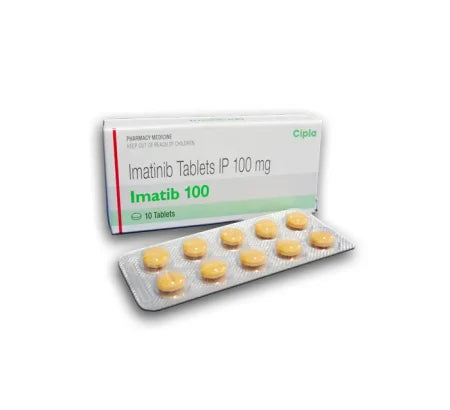
What is an Imatib 100 mg Tablet?
Imatib 100 mg Tablet is a prescription medicine used in the treatment of certain types of cancer and blood-related disorders. It contains Imatinib Mesylate, a targeted therapy that works differently from traditional chemotherapy. Rather than attacking all rapidly dividing cells, it specifically targets abnormal proteins that contribute to the growth and spread of cancer cells.
Imatib 100 mg Tablet is commonly prescribed as part of long-term treatment plans and should only be used under the supervision of a qualified healthcare professional. The medication is designed to help slow disease progression and support disease management in eligible patients.
Active Ingredient
Generic Name: Imatinib Mesylate
Strength: 100 mg
Drug Class: Tyrosine Kinase Inhibitor (TKI)
Dosage Form: Oral Tablet
How Imatib 100 mg Tablet Works
Imatinib belongs to a group of medicines known as tyrosine kinase inhibitors. Certain cancers develop because abnormal proteins send continuous signals that tell cancer cells to grow and multiply uncontrollably.
Imatinib works by blocking these abnormal signals. By targeting specific enzymes involved in cancer cell growth, the medicine helps slow or stop the development of affected cells. This targeted mechanism allows treatment to focus on disease-causing cells while minimizing damage to many healthy cells.
Medical Uses of Imatib 100 mg Tablet
Healthcare providers may prescribe Imatib 100 mg Tablet for the treatment of specific conditions, including:
Chronic Myeloid Leukemia (CML)
One of the most common uses of Imatinib is the treatment of chronic myeloid leukemia, a cancer that affects the blood and bone marrow.
Acute Lymphoblastic Leukemia (ALL)
In certain patients with Philadelphia chromosome-positive ALL, Imatinib may be used as part of a comprehensive treatment plan.
Gastrointestinal Stromal Tumors (GIST)
The medicine is also used to treat gastrointestinal stromal tumors, which are rare tumors that develop in the digestive tract.
Other Approved Conditions
Depending on individual medical needs, healthcare professionals may prescribe Imatinib for additional conditions where abnormal tyrosine kinase activity contributes to disease progression.
Key Features of Imatib 100 mg Tablet
Targeted Cancer Therapy
Designed to act on specific proteins associated with certain cancers rather than affecting all rapidly dividing cells.
Oral Administration
Available in tablet form, allowing patients to take treatment at home as directed by their physician.
Long-Term Disease Management
Often used as part of ongoing treatment strategies to help control disease progression.
Clinically Established Active Ingredient
Contains Imatinib Mesylate, an extensively studied medication used in modern oncology treatment.
Personalized Treatment Approach
Dosage and duration can be adjusted according to the patient's diagnosis, response to therapy, and overall health condition.
Benefits of Imatib 100 mg Tablet
The benefits of treatment may vary depending on the condition being treated and individual patient response. Potential benefits include:
-
Helps slow the growth of abnormal cells
-
Supports long-term disease control
-
Targets specific cancer-related proteins
-
May help reduce disease progression
-
Provides a convenient oral treatment option
-
Can be integrated into individualized treatment plans
-
Supports ongoing monitoring and management by healthcare professionals
How to Take Imatib 100 mg Tablet
Imatib 100 mg Tablet should be taken exactly as prescribed by your healthcare provider.
The tablet is usually swallowed whole with a glass of water and is often recommended to be taken with food to help reduce stomach irritation. Patients should avoid crushing, chewing, or breaking the tablet unless specifically instructed by their doctor.
Taking the medication at the same time each day may help maintain consistent levels of the medicine in the body and improve adherence to treatment.
Dosage Guidelines
The appropriate dosage depends on several factors, including:
-
Type of medical condition being treated
-
Stage or severity of disease
-
Age and body weight
-
Overall health status
-
Liver and kidney function
-
Response to treatment
Dosage adjustments may be necessary throughout therapy based on laboratory results and clinical response. Patients should never change their dosage without medical guidance.
Monitoring During Treatment
Regular monitoring is an important part of treatment with Imatib 100 mg Tablet.
Healthcare providers may recommend:
-
Routine blood tests
-
Liver function assessments
-
Kidney function monitoring
-
Physical examinations
-
Evaluation of treatment response
These assessments help ensure that the medication continues to be safe and effective throughout treatment.
Possible Side Effects
Like all medications, Imatib 100 mg Tablet may cause side effects, although not everyone experiences them.
Common Side Effects
-
Nausea
-
Vomiting
-
Diarrhea
-
Fatigue
-
Muscle cramps
-
Headache
-
Swelling around the eyes
-
Skin rash
-
Abdominal discomfort
Less Common Side Effects
-
Fluid retention
-
Joint pain
-
Reduced appetite
-
Weight changes
-
Dizziness
Serious Side Effects
Immediate medical attention may be required if symptoms such as severe swelling, unusual bleeding, persistent fever, breathing difficulties, severe skin reactions, or signs of liver problems occur.
Precautions and Warnings
Before starting treatment, patients should inform their healthcare provider about all existing medical conditions and medications.
Special caution may be required in patients with:
-
Liver disease
-
Kidney impairment
-
Heart-related conditions
-
History of fluid retention
-
Previous allergic reactions to Imatinib
Women who are pregnant, planning pregnancy, or breastfeeding should discuss potential risks and benefits with their healthcare provider.
Drug Interactions
Imatib 100 mg Tablet may interact with other medications, potentially affecting treatment outcomes or increasing the risk of side effects.
Examples of medicines that may require special consideration include:
-
Certain antibiotics
-
Antifungal medications
-
Blood thinners
-
Anti-seizure medicines
-
Some cholesterol-lowering drugs
-
Herbal supplements
Patients should provide a complete list of prescription medicines, over-the-counter products, and dietary supplements to their healthcare provider.
Storage Instructions
Store the tablets according to the instructions provided by the manufacturer.
-
Keep at room temperature
-
Protect from excessive heat and moisture
-
Store in the original packaging
-
Keep away from children and pets
-
Do not use after the expiration date
Who Should Avoid Imatib 100 mg Tablet?
This medication may not be suitable for everyone. It should generally be avoided or used with caution in:
-
Individuals with known hypersensitivity to Imatinib
-
Patients advised against its use by their healthcare provider
-
Those with certain medical conditions requiring alternative treatment approaches
A healthcare professional can determine whether this medicine is appropriate based on an individual's medical history and treatment goals.
Important Safety Information
Imatib 100 mg Tablet is a specialized prescription medication intended for the management of specific cancers and blood disorders. Treatment should always be guided by a qualified healthcare provider, with regular follow-up appointments and monitoring to evaluate effectiveness and safety.
Patients should carefully follow medical instructions, attend scheduled checkups, and promptly report any unusual symptoms during treatment. This helps support optimal treatment outcomes while minimizing potential risks associated with therapy.
What is Lorem Ipsum?
Lorem Ipsum is simply dummy text of the printing and typesetting industry. Lorem Ipsum has been the industry's standard dummy text ever since the 1500s, when an unknown printer took a galley of type and scrambled it to make a type specimen book. It has survived not only five centuries, but also the leap into electronic typesetting, remaining essentially unchanged. It was popularised in the 1960s with the release of Letraset sheets containing Lorem Ipsum passages, and more recently with desktop publishing software like Aldus PageMaker including versions of Lorem Ipsum.
Shipping Details
Estimated ship dimensions: 11.5 inches length x 9.0 inches width x 2.0 inches height
Estimated ship weight: 2.48 pounds
We regret that this item cannot be shipped to PO Boxes.
Lorem ipsum dolor sit amet, consectetur adipisicing elit, sed do eiusmod tempor incididunt ut labore et dolore magna aliqua. Ut enim ad minim veniam, quis nostrud exercitation
Returns
Not happy with a purchase? No problem. We’ve made returning items as easy as possible. And, most purchases can be returned for free. Learn more about our Returns Policy