

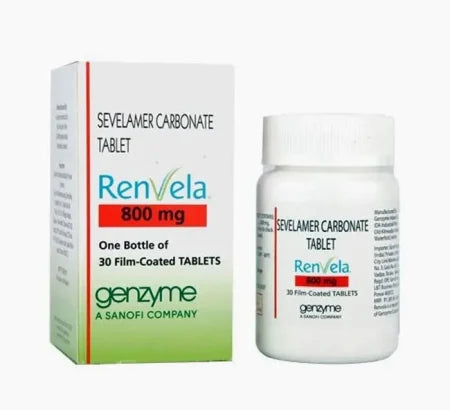
What is Renvela 800 mg?
Renvela 800 mg is a prescription medication used to help manage elevated phosphate levels in individuals with chronic kidney disease (CKD), particularly those undergoing dialysis treatment. The tablet contains Sevelamer Carbonate, a non-calcium, non-metal phosphate binder that helps control phosphorus absorption from food.
High phosphorus levels can develop when the kidneys are unable to effectively remove excess phosphate from the body. Over time, this imbalance may contribute to complications affecting bones, blood vessels, and other organs. Renvela 800 mg is commonly prescribed as part of a comprehensive treatment plan that includes dietary management and regular medical monitoring.
Active Ingredient
Generic Name: Sevelamer Carbonate
Strength: 800 mg
Drug Category: Phosphate Binder
Dosage Form: Oral Tablet
Administration Route: Oral Use
Understanding High Phosphate Levels in Kidney Disease
Healthy kidneys help maintain the balance of minerals in the bloodstream. When kidney function declines, phosphorus can accumulate in the body because it is no longer filtered efficiently.
Excess phosphate may lead to a condition known as hyperphosphatemia. This condition can increase the risk of bone weakness, calcium imbalance, vascular calcification, and cardiovascular complications. Managing phosphorus levels is therefore an important aspect of long-term kidney care.
How Renvela 800 mg Works
Renvela 800 mg works inside the digestive tract rather than entering the bloodstream. After being taken with meals, the active ingredient binds to phosphate present in food. This binding process creates a compound that cannot be absorbed by the body and is eliminated naturally through the stool.
By reducing the amount of phosphorus absorbed from the diet, Renvela helps maintain healthier phosphate levels and supports overall mineral balance in patients with kidney disease.
Unlike some phosphate binders, Renvela does not contain calcium, making it a suitable option for patients who need phosphorus control without additional calcium intake.
Key Features of Renvela 800 mg
Non-Calcium Phosphate Binder
Renvela controls phosphate levels without increasing calcium exposure, which may be beneficial for certain patients.
Designed for Chronic Kidney Disease Management
It is commonly prescribed for patients with advanced kidney disease who require phosphorus control.
Acts Within the Digestive System
The medication works locally in the gastrointestinal tract and is not intended to be absorbed into the bloodstream.
Supports Mineral Balance
Helps manage phosphorus levels as part of a broader kidney disease treatment strategy.
Suitable for Long-Term Use
When prescribed by a healthcare professional, Renvela may be used as an ongoing treatment for phosphate management.
Benefits of Renvela 800 mg
Renvela 800 mg offers several therapeutic benefits for patients dealing with elevated phosphate levels.
-
Helps reduce phosphorus absorption from food
-
Assists in controlling hyperphosphatemia
-
Supports healthy mineral balance
-
Helps protect bone health in kidney disease patients
-
Does not contain calcium
-
Can be incorporated into long-term treatment plans
-
Works alongside dietary phosphate restrictions
-
Supports overall management of chronic kidney disease
Who May Be Prescribed Renvela 800 mg?
Healthcare providers may prescribe Renvela 800 mg for adults with chronic kidney disease who have elevated blood phosphate levels.
It is frequently used in:
-
Patients receiving hemodialysis
-
Patients undergoing peritoneal dialysis
-
Individuals with advanced kidney disease requiring phosphate control
-
Patients advised to limit calcium-based phosphate binders
The suitability of treatment depends on individual medical needs and laboratory results.
How to Take Renvela 800 mg
Renvela should be taken exactly as directed by a healthcare professional.
The tablet is typically taken with meals because phosphate from food must be present for the medication to work effectively. Taking it without food may reduce its effectiveness.
Swallow the tablet whole with water unless your healthcare provider provides different instructions.
Patients should continue following any kidney-friendly dietary recommendations while using this medication.
Dosage Information
The prescribed dosage varies depending on several factors, including:
-
Current phosphorus levels
-
Kidney function status
-
Dietary phosphate intake
-
Dialysis treatment requirements
-
Response to therapy
Healthcare providers may adjust the dose periodically based on blood test results and ongoing monitoring.
Patients should never change their dosage without medical advice.
Possible Side Effects
Like many medications, Renvela 800 mg may cause side effects in some individuals. Most side effects are related to the digestive system because the medication works within the gastrointestinal tract.
Common Side Effects
-
Nausea
-
Vomiting
-
Constipation
-
Diarrhea
-
Stomach discomfort
-
Indigestion
-
Abdominal pain
-
Gas or bloating
These effects are often mild and may improve as the body adjusts to treatment.
Serious Side Effects
Although uncommon, certain symptoms require prompt medical attention.
Seek immediate medical care if you experience:
-
Severe abdominal pain
-
Persistent vomiting
-
Difficulty swallowing
-
Intestinal blockage symptoms
-
Blood in stool
-
Severe allergic reactions
Any unusual or severe symptoms should be discussed with a healthcare professional.
Precautions Before Using Renvela 800 mg
Before starting treatment, inform your healthcare provider about your complete medical history.
Special caution may be necessary if you have:
-
Gastrointestinal disorders
-
Difficulty swallowing
-
History of bowel obstruction
-
Previous digestive tract surgery
-
Inflammatory bowel conditions
-
Severe constipation
Regular monitoring may be recommended throughout treatment.
Drug Interactions
Renvela can affect how certain medications are absorbed within the digestive system.
Possible interactions may occur with:
-
Thyroid medications
-
Anti-arrhythmic drugs
-
Antibiotics
-
Anti-seizure medications
-
Immunosuppressant medicines
-
Certain vitamin supplements
To minimize interaction risks, healthcare providers may recommend taking other medications at different times than Renvela.
Always provide a complete list of all prescription drugs, over-the-counter medicines, and supplements you use.
Dietary Considerations
Patients taking Renvela are often advised to follow dietary guidelines that help control phosphorus intake.
Foods commonly containing higher phosphorus levels include:
-
Processed foods
-
Soft drinks containing phosphate additives
-
Dairy products
-
Organ meats
-
Certain packaged snacks
A healthcare provider or dietitian can help create an appropriate meal plan based on individual needs.
Storage Instructions
Store Renvela 800 mg according to the instructions provided on the packaging.
-
Keep at room temperature
-
Protect from excessive moisture
-
Store away from direct sunlight
-
Keep in the original container
-
Keep out of reach of children and pets
Do not use tablets beyond their expiration date.
Who Should Avoid Renvela 800 mg?
Renvela may not be appropriate for everyone.
This medication is generally not recommended for individuals with:
-
Known allergy to Sevelamer Carbonate
-
Bowel obstruction
-
Severe gastrointestinal motility disorders
A healthcare professional should determine whether Renvela is suitable based on the patient's medical condition.
Important Medical Monitoring
Patients using Renvela 800 mg may require routine laboratory monitoring to evaluate:
-
Serum phosphorus levels
-
Calcium levels
-
Kidney function
-
Nutritional status
-
Vitamin levels when necessary
Regular follow-up appointments help ensure treatment effectiveness and safety.
What is Lorem Ipsum?
Lorem Ipsum is simply dummy text of the printing and typesetting industry. Lorem Ipsum has been the industry's standard dummy text ever since the 1500s, when an unknown printer took a galley of type and scrambled it to make a type specimen book. It has survived not only five centuries, but also the leap into electronic typesetting, remaining essentially unchanged. It was popularised in the 1960s with the release of Letraset sheets containing Lorem Ipsum passages, and more recently with desktop publishing software like Aldus PageMaker including versions of Lorem Ipsum.
Shipping Details
Estimated ship dimensions: 11.5 inches length x 9.0 inches width x 2.0 inches height
Estimated ship weight: 2.48 pounds
We regret that this item cannot be shipped to PO Boxes.
Lorem ipsum dolor sit amet, consectetur adipisicing elit, sed do eiusmod tempor incididunt ut labore et dolore magna aliqua. Ut enim ad minim veniam, quis nostrud exercitation
Returns
Not happy with a purchase? No problem. We’ve made returning items as easy as possible. And, most purchases can be returned for free. Learn more about our Returns Policy