

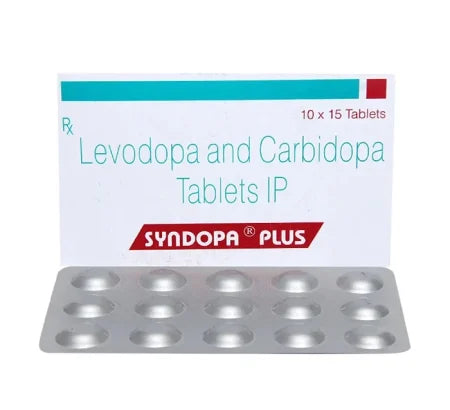
Understanding Syndopa Plus
Syndopa Plus is a prescription medication commonly used in the management of symptoms associated with Parkinson’s disease and certain Parkinson-like movement disorders. It contains a combination of Levodopa and Carbidopa, two ingredients that work together to help improve motor function and reduce difficulties related to movement control.
The medication is often prescribed to individuals experiencing symptoms such as muscle stiffness, slowed movements, tremors, and balance problems. By helping restore dopamine activity in the brain, Syndopa Plus may contribute to improved physical mobility and daily functioning.
Active Ingredients
Levodopa
Levodopa is converted into dopamine within the brain. Dopamine is a neurotransmitter that plays an essential role in coordinating movement and muscle control. Low dopamine levels are strongly associated with Parkinson’s disease symptoms.
Carbidopa
Carbidopa helps prevent the premature breakdown of Levodopa before it reaches the brain. This allows more Levodopa to be utilized effectively while also helping reduce certain side effects such as nausea and vomiting.
How Syndopa Plus Works
Parkinson’s disease is characterized by a gradual decline in dopamine-producing nerve cells. As dopamine levels decrease, communication between the brain and muscles becomes less effective, leading to movement-related symptoms.
Syndopa Plus addresses this problem by supplying Levodopa, which the body converts into dopamine. Carbidopa supports this process by ensuring that a larger amount of Levodopa reaches the brain instead of being broken down elsewhere in the body.
This combined action helps improve motor control and may reduce symptoms that interfere with daily activities.
Therapeutic Uses of Syndopa Plus
Syndopa Plus is primarily prescribed for:
-
Parkinson’s disease
-
Parkinsonism following brain injury
-
Drug-induced Parkinson-like symptoms in selected cases
-
Movement disorders associated with dopamine deficiency
-
Management of tremors and muscle rigidity under medical supervision
Treatment goals vary from person to person depending on symptom severity and overall health condition.
Key Characteristics of Syndopa Plus
Dual-Ingredient Combination
The combination of Levodopa and Carbidopa is designed to improve dopamine availability within the brain while minimizing unnecessary drug breakdown in the body.
Supports Movement Control
The medication helps improve communication between the nervous system and muscles, which may contribute to smoother and more coordinated movements.
Long-Term Neurological Management
Syndopa Plus is commonly included in long-term treatment plans for Parkinson’s disease, with dosage adjustments made according to individual response.
Oral Administration
The tablet formulation provides a convenient method of administration and can be incorporated into a physician-directed treatment routine.
Potential Benefits of Syndopa Plus
Patients receiving Syndopa Plus under medical supervision may experience:
-
Improved muscle movement
-
Reduction in body stiffness
-
Better walking ability
-
Improved balance and coordination
-
Decreased tremors
-
Enhanced ability to perform daily tasks
-
Better control over involuntary movement difficulties
-
Increased physical independence in some individuals
The extent of improvement varies among patients and depends on disease progression and treatment response.
How to Take Syndopa Plus
Syndopa Plus should be taken exactly as prescribed by a healthcare professional.
The tablet is usually swallowed whole with water and may be taken with or without food depending on individual tolerance. Some patients may be advised to follow specific dietary recommendations because high-protein meals can sometimes affect Levodopa absorption.
Maintaining a consistent dosing schedule is important to achieve stable symptom control.
Patients should not stop taking the medication suddenly unless specifically instructed by their doctor, as abrupt discontinuation may lead to serious complications.
Dosage Considerations
The dosage of Syndopa Plus is individualized and may depend on:
-
Age
-
Severity of Parkinson’s symptoms
-
Previous treatment history
-
Response to therapy
-
Kidney function
-
Liver function
-
Other existing medical conditions
Healthcare providers may gradually adjust the dosage to achieve the most effective balance between symptom relief and side-effect management.
Possible Side Effects
Like many neurological medications, Syndopa Plus may cause side effects in some individuals.
Common Side Effects
-
Nausea
-
Vomiting
-
Dizziness
-
Dry mouth
-
Headache
-
Sleep disturbances
-
Loss of appetite
-
Fatigue
These effects are often mild and may improve as the body adjusts to treatment.
Neurological Side Effects
Some patients may experience:
-
Involuntary movements
-
Muscle twitching
-
Confusion
-
Hallucinations
-
Mood changes
-
Restlessness
Any unusual neurological symptoms should be reported to a healthcare provider promptly.
Serious Side Effects
Immediate medical attention may be required if symptoms such as the following occur:
-
Severe allergic reactions
-
Irregular heartbeat
-
Difficulty breathing
-
Persistent chest pain
-
Severe behavioral changes
-
Sudden loss of consciousness
Although uncommon, these reactions require prompt evaluation.
Precautions and Warnings
Before starting Syndopa Plus, patients should inform their healthcare provider about their complete medical history.
Special caution may be required in individuals with:
-
Heart disease
-
Glaucoma
-
Liver disorders
-
Kidney disease
-
Mental health conditions
-
History of skin cancer
-
Hormonal disorders
-
Blood pressure abnormalities
Regular medical monitoring may be recommended during treatment.
Drug Interactions
Certain medications can influence how Syndopa Plus works or increase the risk of side effects.
Potential interactions may occur with:
-
Antidepressants
-
Antipsychotic medications
-
Blood pressure medicines
-
Iron supplements
-
Certain anti-seizure drugs
-
Sedative medications
-
Other Parkinson’s disease treatments
Patients should always provide a complete list of medications and supplements to their healthcare provider before beginning therapy.
Storage Instructions
To maintain medication quality:
-
Store at room temperature
-
Protect from excessive heat and moisture
-
Keep tablets in their original packaging
-
Avoid direct sunlight exposure
-
Keep out of reach of children and pets
Proper storage helps preserve effectiveness throughout the product’s shelf life.
Who Should Not Use Syndopa Plus?
Syndopa Plus may not be suitable for everyone. Healthcare providers may avoid prescribing it in individuals with:
-
Known allergy to Levodopa or Carbidopa
-
Certain untreated psychiatric disorders
-
Specific types of glaucoma
-
Serious cardiovascular instability
-
Conditions where dopamine-enhancing therapy is contraindicated
A thorough medical assessment is necessary before treatment begins.
Important Information About Syndopa Plus
Syndopa Plus is a widely recognized medication used in the management of Parkinson’s disease and related movement disorders. Through its combination of Levodopa and Carbidopa, it helps address dopamine deficiency and supports better motor control. Treatment outcomes differ between individuals, making regular medical supervision, dose monitoring, and follow-up evaluations important components of successful therapy.
By understanding how Syndopa Plus works, its potential benefits, precautions, and proper usage guidelines, patients can make informed decisions in collaboration with their healthcare professionals regarding their neurological care.
What is Lorem Ipsum?
Lorem Ipsum is simply dummy text of the printing and typesetting industry. Lorem Ipsum has been the industry's standard dummy text ever since the 1500s, when an unknown printer took a galley of type and scrambled it to make a type specimen book. It has survived not only five centuries, but also the leap into electronic typesetting, remaining essentially unchanged. It was popularised in the 1960s with the release of Letraset sheets containing Lorem Ipsum passages, and more recently with desktop publishing software like Aldus PageMaker including versions of Lorem Ipsum.
Shipping Details
Estimated ship dimensions: 11.5 inches length x 9.0 inches width x 2.0 inches height
Estimated ship weight: 2.48 pounds
We regret that this item cannot be shipped to PO Boxes.
Lorem ipsum dolor sit amet, consectetur adipisicing elit, sed do eiusmod tempor incididunt ut labore et dolore magna aliqua. Ut enim ad minim veniam, quis nostrud exercitation
Returns
Not happy with a purchase? No problem. We’ve made returning items as easy as possible. And, most purchases can be returned for free. Learn more about our Returns Policy