

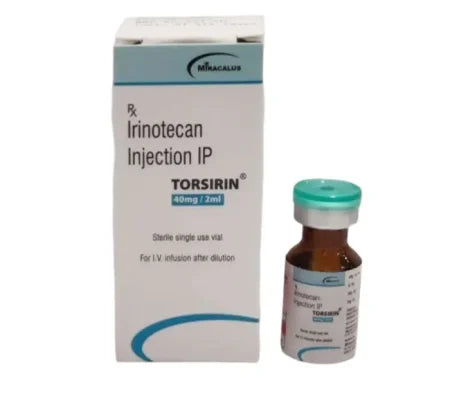
What is Torsirin 40 MG/2ml Injection?
Torsirin 40 MG/2ml Injection is an injectable medication primarily used to manage fluid retention (edema) associated with various medical conditions, including heart failure, kidney disorders, and liver disease. It contains Torsemide, a potent loop diuretic that helps the body eliminate excess salt and water through increased urine production.
Healthcare professionals may administer this injection when rapid fluid removal is necessary or when oral medications are not suitable. Its injectable form allows for faster therapeutic action, making it useful in hospital and clinical settings.
Active Ingredient
Generic Name: Torsemide
Strength: 40 mg/2 ml
Drug Category: Loop Diuretic
Dosage Form: Injectable Solution
Route of Administration: Intravenous (IV) or Intramuscular (IM), as directed by a healthcare professional
How Torsirin 40 MG/2ml Injection Works
The active ingredient, Torsemide, acts on a specific area of the kidneys known as the loop of Henle. It blocks the reabsorption of sodium and chloride, causing excess water and electrolytes to be excreted through urine.
This mechanism helps reduce fluid accumulation in tissues and organs, relieving symptoms such as swelling in the legs, ankles, abdomen, and lungs. By decreasing excess fluid volume, the medication may also help reduce strain on the heart and improve breathing difficulties associated with fluid overload.
Medical Uses of Torsirin 40 MG/2ml Injection
Management of Edema
One of the primary uses of Torsirin 40 MG/2ml Injection is the treatment of edema caused by congestive heart failure, kidney disease, or liver-related conditions. Excess fluid buildup can lead to discomfort and restricted mobility, and this medication helps reduce those symptoms.
Heart Failure Support
Patients with heart failure often experience fluid retention due to reduced cardiac efficiency. This injection helps remove excess fluid, which may improve breathing and decrease swelling.
Kidney-Related Fluid Retention
Certain kidney disorders can interfere with the body's ability to regulate fluid balance. Torsemide helps support fluid management by promoting urine production.
Liver Disease-Associated Swelling
Fluid accumulation in patients with liver disease can cause abdominal swelling and discomfort. This medication may be prescribed as part of a broader treatment approach to help manage these symptoms.
Situations Requiring Rapid Diuresis
Because it is administered by injection, healthcare providers may choose Torsirin 40 MG/2ml Injection when a quicker response is needed compared to oral diuretics.
Key Features
Fast Therapeutic Action
The injectable formulation allows the medication to enter the bloodstream quickly, providing a faster onset of action than many oral alternatives.
Effective Fluid Reduction
It helps remove excess fluid from the body, reducing swelling and improving comfort in patients experiencing fluid overload.
Hospital and Clinical Use
The injection is commonly administered under medical supervision in healthcare facilities where patient response can be closely monitored.
Reliable Diuretic Activity
Torsemide is recognized for its potent and predictable diuretic effect, making it a frequently prescribed option for fluid retention management.
Flexible Administration
Depending on the patient's condition, the injection may be given intravenously or intramuscularly as directed by a healthcare professional.
Benefits of Torsirin 40 MG/2ml Injection
-
Helps reduce excess fluid accumulation in the body
-
Supports management of edema associated with heart, kidney, or liver disorders
-
May improve breathing difficulties related to fluid overload
-
Helps decrease swelling in the legs, feet, and abdomen
-
Provides rapid action when oral treatment is not appropriate
-
Supports better physical comfort and mobility
-
Can be administered under professional medical supervision for accurate dosing
Administration Guidelines
Torsirin 40 MG/2ml Injection should only be administered by a qualified healthcare professional. The dosage and frequency depend on the patient's medical condition, fluid status, kidney function, and treatment response.
Self-administration is not recommended unless specifically instructed and trained by a healthcare provider.
Regular monitoring of fluid balance, blood pressure, and electrolyte levels may be necessary during treatment.
Recommended Dosage Considerations
Several factors influence the appropriate dosage, including:
-
Age of the patient
-
Severity of fluid retention
-
Underlying medical condition
-
Kidney and liver function
-
Concurrent medications
-
Individual treatment response
Healthcare providers will determine the most suitable dosing schedule based on these factors.
Possible Side Effects
Like all medications, Torsirin 40 MG/2ml Injection may cause side effects, although not everyone experiences them.
Common Side Effects
-
Increased urination
-
Dizziness
-
Headache
-
Temporary weakness
-
Muscle cramps
-
Fatigue
-
Mild dehydration
Less Common Side Effects
-
Low blood pressure
-
Electrolyte imbalance
-
Dry mouth
-
Increased thirst
-
Changes in blood sugar levels
Serious Side Effects
Immediate medical attention may be required if any of the following occur:
-
Severe dehydration
-
Irregular heartbeat
-
Significant decrease in urine output
-
Severe allergic reaction
-
Fainting episodes
-
Persistent confusion
-
Severe electrolyte disturbances
Precautions and Warnings
Before receiving Torsirin 40 MG/2ml Injection, inform your healthcare provider about any existing medical conditions.
Special caution may be necessary in patients with:
-
Kidney impairment
-
Liver disease
-
Diabetes
-
Low blood pressure
-
Electrolyte abnormalities
-
Gout
-
Hearing-related disorders
Regular laboratory testing may be recommended to monitor treatment safety.
Drug Interactions
Torsemide may interact with other medications and alter their effects.
Potential interactions may occur with:
-
Blood pressure medications
-
Nonsteroidal anti-inflammatory drugs (NSAIDs)
-
Lithium-containing medicines
-
Certain antibiotics
-
Corticosteroids
-
Digoxin
-
Diabetes medications
A complete medication review should be performed before treatment begins.
Monitoring During Treatment
Patients receiving Torsirin 40 MG/2ml Injection may require periodic monitoring of:
-
Blood pressure
-
Kidney function
-
Electrolyte levels
-
Fluid balance
-
Body weight
-
Overall clinical response
These evaluations help healthcare providers adjust treatment when necessary.
Storage Instructions
-
Store according to the manufacturer's recommendations.
-
Protect from excessive heat and direct sunlight.
-
Keep the injection in its original packaging until use.
-
Do not freeze unless specifically instructed.
-
Keep out of reach of children.
Who Should Not Receive This Medication?
Torsirin 40 MG/2ml Injection may not be appropriate for individuals who:
-
Have a known allergy to Torsemide or similar medications
-
Are unable to produce urine due to severe kidney impairment
-
Have severe dehydration
-
Have certain untreated electrolyte abnormalities
-
Require alternative treatment based on clinical assessment
Important Information
Torsirin 40 MG/2ml Injection is intended for use under medical supervision and should be administered according to professional healthcare guidance. Proper monitoring and adherence to prescribed treatment recommendations are important for achieving optimal therapeutic outcomes while minimizing potential risks. The use of Torsirin 40 MG/2ml Injection should always be based on an individualized medical evaluation and ongoing clinical assessment.
What is Lorem Ipsum?
Lorem Ipsum is simply dummy text of the printing and typesetting industry. Lorem Ipsum has been the industry's standard dummy text ever since the 1500s, when an unknown printer took a galley of type and scrambled it to make a type specimen book. It has survived not only five centuries, but also the leap into electronic typesetting, remaining essentially unchanged. It was popularised in the 1960s with the release of Letraset sheets containing Lorem Ipsum passages, and more recently with desktop publishing software like Aldus PageMaker including versions of Lorem Ipsum.
Shipping Details
Estimated ship dimensions: 11.5 inches length x 9.0 inches width x 2.0 inches height
Estimated ship weight: 2.48 pounds
We regret that this item cannot be shipped to PO Boxes.
Lorem ipsum dolor sit amet, consectetur adipisicing elit, sed do eiusmod tempor incididunt ut labore et dolore magna aliqua. Ut enim ad minim veniam, quis nostrud exercitation
Returns
Not happy with a purchase? No problem. We’ve made returning items as easy as possible. And, most purchases can be returned for free. Learn more about our Returns Policy