

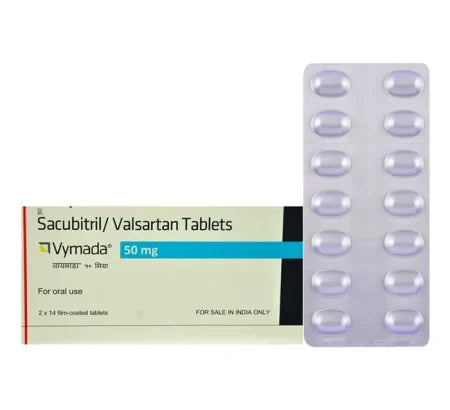
What is Vymada 50 mg?
Vymada Vymada 50 mg is a prescription medication primarily used in the long-term management of certain types of chronic heart failure. It combines two active ingredients—Sacubitril and Valsartan—that work through different mechanisms to improve heart function, reduce strain on the cardiovascular system, and lower the risk of heart failure-related complications.
Unlike medicines that only control symptoms, Vymada 50 mg targets important biological pathways involved in the progression of heart failure. It is generally prescribed as part of a comprehensive treatment plan that may include lifestyle modifications and other cardiovascular medications.
Active Ingredients
Sacubitril
Sacubitril belongs to a class of medicines known as neprilysin inhibitors. It increases the levels of naturally occurring peptides in the body that help relax blood vessels, promote sodium excretion, and reduce fluid accumulation, making it easier for the heart to pump blood efficiently.
Valsartan
Valsartan is an angiotensin II receptor blocker (ARB). It prevents the action of angiotensin II, a hormone responsible for narrowing blood vessels. By relaxing blood vessels, Valsartan helps lower blood pressure and decreases the workload placed on the heart.
How Vymada 50 mg Works
Vymada 50 mg provides a dual-action approach to heart failure management.
Sacubitril helps preserve beneficial hormones that support healthy blood vessel function and fluid balance, while Valsartan blocks harmful hormonal activity that contributes to blood vessel constriction and increased blood pressure. Together, these actions improve blood circulation, reduce cardiac stress, and help the heart pump more effectively over time.
This combination is intended for continuous treatment and is not designed to provide immediate relief during episodes of acute heart failure.
Key Features of Vymada 50 mg
Dual Mechanism of Action
Combines two clinically established medicines that work together to improve cardiovascular function through complementary pathways.
Supports Long-Term Heart Health
Regular use as prescribed may help slow the progression of chronic heart failure and improve overall cardiac performance.
Improves Blood Flow
Promotes healthier circulation by relaxing blood vessels and reducing resistance within the cardiovascular system.
Helps Reduce Cardiac Workload
Decreases the pressure against which the heart must pump, allowing the heart muscle to work more efficiently.
Oral Tablet Formulation
Convenient tablet designed for routine daily administration according to a healthcare provider's instructions.
Medical Uses of Vymada 50 mg
Healthcare professionals may prescribe Vymada 50 mg for:
-
Chronic heart failure with reduced ejection fraction (HFrEF)
-
Lowering the risk of cardiovascular hospitalization
-
Reducing the likelihood of heart failure-related complications
-
Improving long-term cardiac function
-
Supporting patients requiring combination heart failure therapy
The medicine should always be used according to an individualized treatment plan created by a qualified healthcare provider.
Benefits of Vymada 50 mg
Vymada 50 mg offers multiple therapeutic benefits when taken consistently as prescribed.
-
Helps improve the pumping ability of the heart
-
Supports healthier blood circulation
-
Reduces pressure within blood vessels
-
Helps decrease fluid retention associated with heart failure
-
May reduce the frequency of heart failure-related hospital admissions
-
Supports better exercise tolerance in some patients
-
Helps improve daily functional capacity
-
Provides long-term cardiovascular protection as part of ongoing therapy
Individual treatment outcomes may vary depending on overall health, disease severity, and adherence to therapy.
How to Take Vymada 50 mg
Take Vymada 50 mg exactly as directed by your healthcare provider.
The tablet should be swallowed whole with a glass of water and may generally be taken with or without food. Try to take the medicine at the same time each day to maintain consistent drug levels in the body.
Do not crush, split, or chew the tablet unless specifically advised by your physician. If a dose is missed, follow your healthcare provider's instructions rather than taking extra tablets.
Do not stop taking Vymada without consulting your doctor, as sudden discontinuation may worsen heart failure symptoms.
Dosage Guidelines
The appropriate dosage depends on several clinical factors, including:
-
Age
-
Kidney function
-
Liver function
-
Blood pressure
-
Severity of heart failure
-
Previous cardiovascular treatment
-
Current medications
-
Individual response to therapy
Doctors may gradually adjust the dosage depending on how well the patient tolerates treatment and responds over time.
Possible Side Effects
Like many prescription medicines, Vymada 50 mg may cause side effects, although not everyone experiences them.
Common Side Effects
-
Low blood pressure
-
Dizziness
-
Persistent cough
-
Increased potassium levels
-
Fatigue
-
Mild kidney function changes
-
Headache
These effects are often mild and may improve as the body adapts to treatment.
Serious Side Effects
Seek immediate medical attention if you experience:
-
Severe allergic reaction
-
Swelling of the face, lips, tongue, or throat
-
Difficulty breathing
-
Fainting due to very low blood pressure
-
Significant reduction in urine output
-
Severe kidney problems
-
Extremely high potassium levels causing irregular heartbeat
Precautions and Warnings
Before starting Vymada 50 mg, inform your healthcare provider if you have:
-
Kidney disease
-
Liver impairment
-
Diabetes
-
Low blood pressure
-
High potassium levels
-
History of angioedema
-
Previous heart surgery
-
Pregnancy or plans to become pregnant
Regular monitoring of kidney function, blood pressure, and electrolyte levels may be recommended during treatment.
Drug Interactions
Certain medications may interact with Vymada 50 mg and affect its safety or effectiveness.
Examples include:
-
ACE inhibitors
-
Other ARBs
-
Potassium supplements
-
Potassium-sparing diuretics
-
NSAID pain relievers
-
Lithium
-
Certain blood pressure medications
-
Aliskiren (in specific patients)
Always provide your healthcare provider with a complete list of prescription medicines, over-the-counter drugs, vitamins, and herbal supplements before beginning treatment.
Storage Instructions
Store Vymada 50 mg at normal room temperature in a dry location away from excessive heat and humidity.
Keep the tablets in their original packaging until use and protect them from direct sunlight. Store out of reach of children and pets.
Avoid using the medicine after the expiry date printed on the packaging.
Who Should Avoid Vymada 50 mg?
Vymada 50 mg may not be appropriate for everyone.
It is generally not recommended for individuals who:
-
Are allergic to Sacubitril, Valsartan, or any tablet ingredients
-
Have a history of angioedema associated with ACE inhibitors or ARBs
-
Are taking ACE inhibitors without the required washout period
-
Have severe liver impairment if advised against use
-
Are pregnant, particularly during the second and third trimesters
-
Have been specifically instructed by their healthcare provider not to use this medication
Important Safety Information
Vymada 50 mg is intended for long-term management of heart failure and should only be taken under medical supervision. Regular follow-up appointments, blood pressure monitoring, and laboratory tests help ensure that treatment remains safe and effective.
Patients should continue following recommended dietary advice, fluid management guidelines, physical activity recommendations, and any additional treatment plans provided by their healthcare professional.
This medication should never be shared with others, even if they have similar symptoms, as treatment requirements vary from person to person.
What is Lorem Ipsum?
Lorem Ipsum is simply dummy text of the printing and typesetting industry. Lorem Ipsum has been the industry's standard dummy text ever since the 1500s, when an unknown printer took a galley of type and scrambled it to make a type specimen book. It has survived not only five centuries, but also the leap into electronic typesetting, remaining essentially unchanged. It was popularised in the 1960s with the release of Letraset sheets containing Lorem Ipsum passages, and more recently with desktop publishing software like Aldus PageMaker including versions of Lorem Ipsum.
Shipping Details
Estimated ship dimensions: 11.5 inches length x 9.0 inches width x 2.0 inches height
Estimated ship weight: 2.48 pounds
We regret that this item cannot be shipped to PO Boxes.
Lorem ipsum dolor sit amet, consectetur adipisicing elit, sed do eiusmod tempor incididunt ut labore et dolore magna aliqua. Ut enim ad minim veniam, quis nostrud exercitation
Returns
Not happy with a purchase? No problem. We’ve made returning items as easy as possible. And, most purchases can be returned for free. Learn more about our Returns Policy