

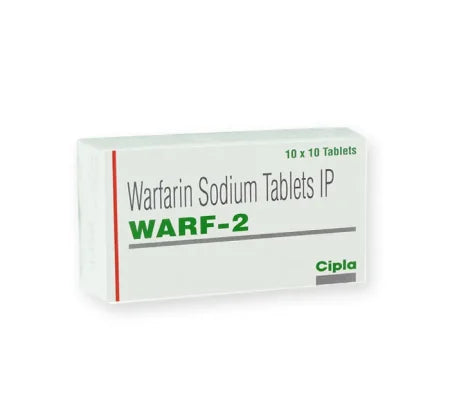
Understanding Warf 2 mg
Warf 2 mg is a prescription medication that contains Warfarin Sodium, an anticoagulant commonly known as a blood thinner. It is used to reduce the risk of harmful blood clot formation within the blood vessels and heart. Blood clots can lead to serious medical conditions such as stroke, deep vein thrombosis (DVT), pulmonary embolism, and other clot-related complications.
Warf 2 mg does not dissolve existing clots directly. Instead, it helps prevent clots from growing larger and reduces the likelihood of new clots developing. Because blood clotting plays a critical role in the body, treatment with Warf 2 mg requires careful monitoring by a healthcare professional.
Active Ingredient
Generic Name: Warfarin Sodium
Strength: 2 mg
Drug Class: Anticoagulant (Vitamin K Antagonist)
Dosage Form: Oral Tablet
How Warf 2 mg Works
The body relies on vitamin K to produce several clotting factors that help stop bleeding when injuries occur. Warfarin works by interfering with the action of vitamin K, reducing the production of these clotting factors.
As clotting activity decreases, blood flows more freely through the circulatory system, lowering the risk of dangerous clot formation. Since the medication affects the body's natural clotting process, regular blood testing is often necessary to ensure that treatment remains within a safe and effective range.
Medical Uses of Warf 2 mg
Warf 2 mg may be prescribed for various conditions associated with an increased risk of blood clots, including:
Prevention of Stroke
Patients with certain heart rhythm disorders, such as atrial fibrillation, may have a higher risk of developing blood clots that can travel to the brain and cause a stroke.
Deep Vein Thrombosis (DVT)
The medication may be used to help prevent or manage blood clots that develop in deep veins, most commonly in the legs.
Pulmonary Embolism
Warf 2 mg may be prescribed for individuals with a history of blood clots that travel to the lungs and block pulmonary arteries.
Heart Valve Conditions
Patients with mechanical heart valves often require anticoagulant therapy to reduce clot-related complications.
Recurrent Clot Prevention
Individuals who have experienced previous clotting events may require long-term treatment to minimize the risk of recurrence.
Key Characteristics of Warf 2 mg
Established Anticoagulant Therapy
Warfarin has been used in clinical practice for many years and remains an important treatment option for selected patients requiring blood clot prevention.
Individualized Treatment Approach
Dosage requirements vary significantly among patients, making personalized treatment and monitoring essential.
Long-Term Management Option
Many patients use Warf 2 mg as part of an ongoing treatment plan under medical supervision.
Comprehensive Clot Prevention
The medication addresses clot formation throughout the body rather than targeting a single location.
Careful Monitoring Requirements
Routine blood tests help healthcare providers adjust treatment when necessary to maintain safe anticoagulation levels.
Potential Benefits of Warf 2 mg
When prescribed appropriately, Warf 2 mg may help:
-
Reduce the risk of blood clot formation
-
Lower the chance of stroke in certain patients
-
Prevent recurrence of clot-related conditions
-
Support healthy blood circulation
-
Help manage clotting risks associated with heart conditions
-
Reduce complications linked to mechanical heart valves
-
Assist in long-term anticoagulation therapy
How to Take Warf 2 mg
Warf 2 mg should be taken exactly as directed by a healthcare provider.
-
Take the tablet at the same time each day.
-
Swallow the tablet whole with water.
-
It may be taken with or without food unless otherwise instructed.
-
Do not change the dose without medical advice.
-
Do not stop treatment suddenly without consulting your doctor.
Consistency is important because even small changes in dosage may significantly affect blood clotting levels.
Monitoring During Treatment
Regular monitoring is an important part of therapy with Warf 2 mg.
Healthcare providers typically use an International Normalized Ratio (INR) blood test to measure how quickly blood clots. INR results help determine whether dosage adjustments are necessary.
Monitoring frequency may vary depending on:
-
Treatment duration
-
Medical condition
-
Age
-
Response to therapy
-
Changes in medications or diet
Possible Side Effects
Like all medications, Warf 2 mg can cause side effects, although not everyone experiences them.
Common Side Effects
-
Easy bruising
-
Minor bleeding from cuts
-
Nosebleeds
-
Bleeding gums
-
Nausea
-
Stomach discomfort
-
Hair thinning
Serious Side Effects
Immediate medical attention may be required if symptoms such as the following occur:
-
Unusual or excessive bleeding
-
Blood in urine
-
Blood in stool
-
Severe headache
-
Sudden weakness
-
Persistent dizziness
-
Coughing up blood
-
Significant unexplained bruising
Precautions Before Using Warf 2 mg
Inform your healthcare provider about your complete medical history before starting treatment.
Special caution may be necessary for patients with:
-
Liver disease
-
Kidney disorders
-
High blood pressure
-
Stomach ulcers
-
Bleeding disorders
-
Recent surgery
-
History of stroke
-
Alcohol dependency
Because Warfarin affects blood clotting, even minor injuries may result in increased bleeding.
Food and Dietary Considerations
Certain foods rich in vitamin K can influence how Warf 2 mg works. Examples include:
-
Spinach
-
Kale
-
Broccoli
-
Brussels sprouts
-
Green leafy vegetables
Patients do not necessarily need to avoid these foods entirely, but maintaining a consistent dietary pattern is often recommended.
Sudden major changes in vitamin K intake may affect treatment outcomes and INR values.
Drug Interactions
Warf 2 mg is known to interact with numerous medications, supplements, and herbal products.
Potential interactions may occur with:
-
Aspirin
-
Nonsteroidal anti-inflammatory drugs (NSAIDs)
-
Certain antibiotics
-
Antifungal medications
-
Thyroid medications
-
Herbal supplements
-
Other anticoagulants
Always inform healthcare providers about all medicines and supplements currently being used.
Storage Information
-
Store at room temperature.
-
Keep away from excessive heat and moisture.
-
Protect from direct sunlight.
-
Keep out of reach of children.
-
Store in the original packaging when possible.
Who May Not Be Suitable for Warf 2 mg?
This medication may not be appropriate for everyone. Healthcare providers may evaluate treatment carefully in patients with:
-
Active bleeding disorders
-
Severe uncontrolled hypertension
-
Recent major surgery
-
Certain liver conditions
-
Known allergy to Warfarin Sodium
-
High risk of serious bleeding complications
Important Safety Information
Warf 2 mg is a medication that requires ongoing medical supervision due to its effect on blood clotting. Regular monitoring, adherence to prescribed dosing, and communication with healthcare professionals are essential components of safe treatment.
Patients should attend all scheduled medical appointments and promptly report any unusual bleeding, bruising, or other concerning symptoms while using Warf 2 mg.
What is Lorem Ipsum?
Lorem Ipsum is simply dummy text of the printing and typesetting industry. Lorem Ipsum has been the industry's standard dummy text ever since the 1500s, when an unknown printer took a galley of type and scrambled it to make a type specimen book. It has survived not only five centuries, but also the leap into electronic typesetting, remaining essentially unchanged. It was popularised in the 1960s with the release of Letraset sheets containing Lorem Ipsum passages, and more recently with desktop publishing software like Aldus PageMaker including versions of Lorem Ipsum.
Shipping Details
Estimated ship dimensions: 11.5 inches length x 9.0 inches width x 2.0 inches height
Estimated ship weight: 2.48 pounds
We regret that this item cannot be shipped to PO Boxes.
Lorem ipsum dolor sit amet, consectetur adipisicing elit, sed do eiusmod tempor incididunt ut labore et dolore magna aliqua. Ut enim ad minim veniam, quis nostrud exercitation
Returns
Not happy with a purchase? No problem. We’ve made returning items as easy as possible. And, most purchases can be returned for free. Learn more about our Returns Policy